

Precious Metals
.webp&w=828&q=75)
Northern Star Resources (ASX: NST): A$38.7B Gold Fields Bid Rejected as Elliott Pressure Builds
Northern Star Resources (ASX: NST) has rejected Gold Fields’ A$38.7 billion takeover proposal amid increased pressure from Elliott Investment Management and leadership changes, while continuing to advance KCGM expansion, Hemi development, and its long-term growth strategy.
.webp&w=828&q=75)
Tungsten Mining NL (ASX: TGN): $50M Funding Advances Watershed Toward 2027 Production
Tungsten Mining NL (ASX: TGN) has raised $50 million to advance its Watershed tungsten project, with a reported 65.9% WO₃ concentrate grade and targeted 2027 production, positioning Tungsten’s project for its next stage of development.
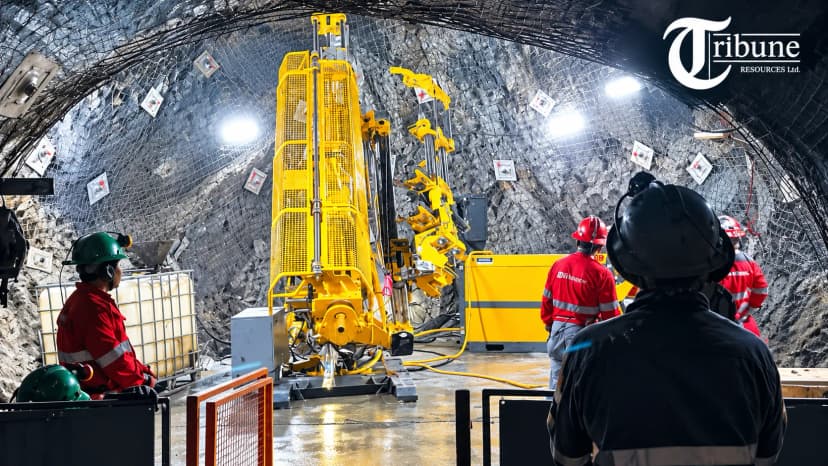
Tribune Resources (ASX: TBR): Strong Gold Production and Significant Upside Potential
Tribune Resources (ASX: TBR) delivered strong 1H FY2026 earnings, supported by higher gold prices and 10,149oz attributable production from its 36.75% EKJV stake. The company retains strong cash generation, fully funded dividends, expanding mine development, and meaningful upside through Star Trek exploration and elevated gold prices.

Resolution Minerals (ASX: RML)'s Nasdaq Debut Shines a Light on Horse Heaven
Resolution Minerals (ASX/Nasdaq: RML) commenced trading ADRs on Nasdaq to attract US institutional capital and federal support for its Idaho Horse Heaven critical minerals project, leveraging dual FAST-41 permitting status across its key antimony, tungsten, and gold prospects.
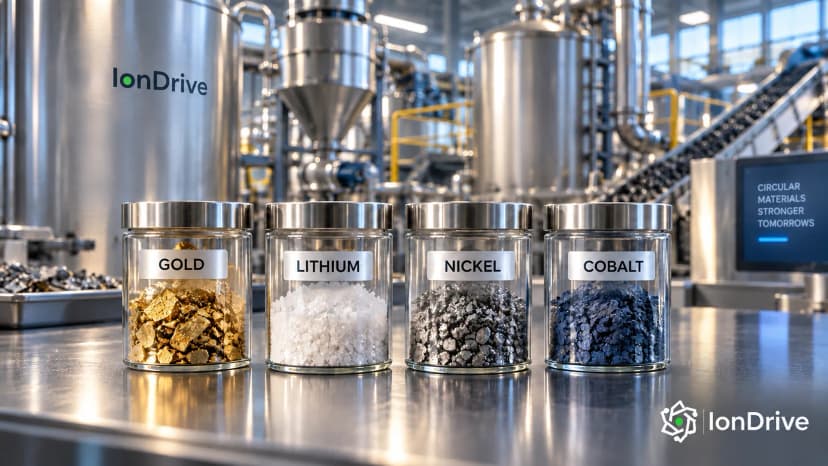
IonDrive (ASX: ION): Hits a Six-Year High on Rare Earth Validation and US Production
IonDrive (ASX: ION) shares surged 24% to a six-year high after an updated technical and economic evaluation of its IONSolv rare earth recycling process, extending a quarterly rally of nearly 280%. With a first commercial-scale production campaign in North America.
.webp&w=828&q=75)
Tribune Resources (ASX: TBR): Operational Discipline and Strategic Leverage in Gold Production
Tribune Resources (ASX: TBR) demonstrates disciplined operations and resilient cash generation through its East Kundana Joint Venture (EKJV) with Evolution Mining, maintaining strong production and resource confidence amid cost pressures and market volatility.
Best precious metals stocks on the ASX: A Strategic Investment Guide
Precious metals stocks Precious metals stocks are shares of companies that make their living from exploring, mining, or processing metals like gold stocks , silver, platinum, and palladium. It’s a broad corner of the market, but most people bump into it when they’re looking for ways to hedge against inflation or steady their portfolio during rocky economic periods. For those seeking the Best precious metals stocks on the ASX, understanding the market tiers is crucial. Within the sector, you’ll find a few distinct layers. There are the major producers, the big names with long histories and large mines, followed by mid-tier companies that are still growing into their identity.
This sectoral report is authored by our veteran commodities analysts and financial advisors, who possess over 25 years of specialized experience in the Australian mining and precious metals markets.

What makes investment in the Precious Metals Stocks attractive?
Some factors often make precious metals stocks attractive to investors, especially when identifying the Best precious metals stocks on the ASX:
1. A Natural Hedge Against Inflation One of the oldest stories in finance is the idea that gold, and by extension, gold-related stocks, tend to hold their value when inflation heats up. This is why many look for ASX gold mining shares for inflation hedge during economic shifts. It’s not a perfect rule, but it’s held often enough that investors still look to precious metals when their dollars feel like they’re shrinking. When the price of gold or silver rises, mining companies can see their margins expand quickly, especially if their production costs stay relatively stable. Precious metals stocks, almost like clockwork, get a bump in interest. And it’s not just the metal itself. Investors often prefer the stocks because they offer torque; if gold rises 5%, a well-run miner might jump 10–15%. That built-in leverage can be appealing for anyone who wants inflation protection with a little extra upside through the Best precious metals stocks on the ASX.
2. Safe-Haven Demand During Uncertainty Whenever headlines turn ominous, geopolitical tension, primary elections, and banking stress, precious metals tend to find themselves back in the spotlight. Human psychology hasn’t changed much over the centuries; we still reach for stores of value when things feel unstable—stocks tied to gold or silver benefit from that instinct. Precious metals stocks can move sharply during these moments because investors aren’t just buying the raw metal; they’re buying companies that can turn that rising demand into profits. These are often the high growth precious metals companies ASX offers to savvy investors. And unlike bars of gold sitting in a vault, a mining company can grow by expanding production, lowering costs, or discovering new deposits. That combination of perceived stability plus growth potential is unusual, and it tends to shine brightest when the world feels the most unpredictable.
3. Limited Supply and High Barriers to Entry Mining isn’t an easy business. It’s capital-intensive, slow, and full of unexpected headaches, from environmental permitting to geological surprises that derail even the best-laid plans. As a result, new supply doesn’t flood the market easily. This natural bottleneck can work in favour of existing producers of the Best precious metals stocks on the ASX. When demand rises, it often takes years before new production can catch up, pushing prices higher in the meantime. Precious metals stocks benefit from this imbalance: limited supply, sticky demand. Even in quieter markets, scarcity tends to support valuations, especially for companies with proven reserves. And because the industry demands expertise and deep pockets, only a handful of players can compete at scale, which helps established miners maintain their footing. Over the long run, that structural difficulty can make precious metals stocks more resilient than people expect.
4. Currency Movements and Global Economic Cycles Precious metals prices often move in the opposite direction to the U.S. dollar. When the dollar weakens due to softer interest rates or shifting global trade flows, gold and silver become cheaper for international buyers. That dynamic can push prices higher, lifting mining stocks along with them. It’s one of those quirks of the market that you start noticing once you’ve watched the charts over a few cycles. During periods of global growth, industrial metals like silver and platinum can benefit even more, as they play a role in manufacturing, clean energy technology, and electronics. This is why investors track the Top silver and platinum stocks Australia for industrial exposure. Meanwhile, during slowdowns, gold tends to hold up better because it’s seen as a refuge. That creates a unique blend: Best precious metals stocks on the ASX don’t rely on a single economic story. They can perform in booms and busts, just for different reasons. For investors, that versatility is valuable. Not many sectors can say they benefit both when factories are humming and when central banks start cutting rates after a slump.
5. Leverage to Rising Metal Prices One of the strongest selling points of precious metals stocks is the built-in leverage they offer. If the underlying commodity rises, a miner’s profitability can explode. That’s because their costs, labour, fuel, and equipment, don’t usually rise at the same pace as the metal price. So every extra dollar above their “all-in sustaining cost” drops almost straight to the bottom line. It’s a bit like owning the metal with an amplifier attached. Royalty and streaming companies add another twist: they don’t operate mines, so they avoid many of the headaches, but they still collect a share of production. That makes them highly profitable when prices climb. For investors seeking exposure to gold or silver with growth potential, this leverage is a significant draw in high growth precious metals companies ASX. And with long-term demand for metals supported by everything from investment flows to industrial use, that upside remains a compelling reason people keep circling back to the sector.
Areas for investment in the Precious Metals Stocks on the ASX
If you’re looking to invest in the Best precious metals stocks on the ASX, consider three main subsectors.
1. Large ProducersThese are companies with established mines, solid production volumes and relatively lower exploration risk. Northern Star Resources Ltd (ASX: NST) is one such example. It sold 1.62 million ounces of gold in its 2024 fiscal year and has multiple operations in Western Australia and the U.S. Evolution Mining Ltd (ASX: EVN) is another major producer, operating mines across NSW, Queensland and WA (and overseas) with substantial output. Regis Resources Ltd (ASX: RRL) is somewhat smaller than the first two but still established, with Western Australia assets (e.g., Duketon) and a steady production base. Lower risk (relatively) because production exists, cash flows are more predictable, and they tend to benefit directly from rising gold prices, making them some of the Best precious metals stocks on the ASX. For investors who prefer a balanced exposure to the metals sector, this is a solid starting point.
2. Mid-Tier & Growth Producers / Developers Here we find companies that may produce less today, or are expanding/developing new mines, so higher risk but higher potential reward. Perseus Mining Ltd (ASX: PRU) is in this category with mines in Africa (e.g., Côte d’Ivoire) and growth projects. Genesis Minerals Ltd (ASX: GMD) is also mentioned by brokers as having upside, given its operations in WA's Leonora region. These companies are less mature; they might offer more upside if metal prices increase or if their development/expansion plans succeed. But at the same time, the risk is greater (cost overruns, permitting, mine-life extension risk, etc.). If you believe the gold/silver environment will be strong, this is where you might find high growth precious metals companies ASX enthusiasts target.
3. Exploration & Small-cap/Junior StocksThis is the highest-risk segment: companies with little or no production, exploring for deposits, and making discoveries (or not). These include companies exploring under-the-radar, with enormous potential if they hit a significant deposit. If you’re willing to stomach volatility, exploration stocks can provide huge upside (if they succeed) because the market assigns big multiples to discovery potential. But conversely, many will not succeed. Still, for speculative gains, these are often the most talked-about Best precious metals stocks on the ASX.
Which area offers better opportunities? It really depends on your risk appetite, time-horizon and conviction about the metals environment. That said: If you believe gold (and perhaps silver) prices will continue to rise (due to inflation, uncertainty or other drivers), then mid-tier and growth producers could offer arguably the best balance of risk versus reward: they have production (or near production) so some base credibility, but also enough growth potential that gains could be meaningful. This category often houses the high growth precious metals companies ASX investors prioritize. If you want greater safety, the large producers are your go-to, but they have less upside and are more stable. But if you’re very bullish and can handle big swings, the junior/exploration space might be where you “hit the lottery”, but equally many will disappoint.

How to find top-performing Precious Metals Stocks on the ASX?
Below are four of the most important factors to consider when choosing top-performing precious-metals stocks on the ASX, specifically when looking for the Best precious metals stocks on the ASX:
1. Production Costs and Profit Margins All-in sustaining cost (AISC) is essential. It tells you how much it costs a miner to pull an ounce of gold or silver out of the ground, including everything from fuel and labour to the expense of keeping the operation running long-term. When metal prices are trending higher, even an average miner can muddle along, but low-cost producers shine because they have more room to breathe. A company with an AISC comfortably below the market price has a cushion, meaning if gold drops $100 or $150, they’re still profitable. Low costs also give management flexibility: they can reinvest in exploration, extend mine life, or reduce debt. High-margin producers tend to weather market downturns with much less drama, and over time, they often outperform simply because they keep more of what they earn. This is a key metric for ASX gold mining shares for inflation hedge. Think of it as choosing a business with built-in financial resilience rather than one forever living on the edge.
2. Resource Quality and Mine Life A miner is only as good as the ground it’s digging. High-grade ore, meaning ore that contains more gold or silver per tonne, can dramatically improve profitability because it takes less energy and material to produce the same amount of metal. Long mine life is another significant factor. A project with only three or four years left might struggle to justify substantial investments. In contrast, one with a decade or more ahead has room for expansion, operational improvements, and steady cash flow. Investors often overlook the geology because it feels technical, but it’s the foundation of the business. If a company keeps having to replace declining reserves or constantly hunt for its next deposit, it becomes more of a gamble. Meanwhile, companies sitting on strong, long-life assets can ride metal cycles more smoothly, and they tend to attract long-term institutional investors, always a good sign for the Best precious metals stocks on the ASX.
3. Management Quality and Track Record A solid management team knows how to control costs, keep projects on schedule, and avoid the kind of operational surprises that wipe out shareholder value. This is vital for the high growth precious metals companies ASX lists. Look at how they’ve handled challenges in the past: did they communicate clearly during downturns? Did they raise capital responsibly rather than diluting shareholders at the worst possible time? Some CEOs have a reputation for building mines on time and under budget; others seem to lurch from crisis to crisis. You can pick up a lot just by listening to quarterly calls or reading investor presentations; you’ll start to sense whether management understands the business or is just trying to survive another year. Strong leadership doesn’t guarantee returns, but poor leadership almost always guarantees trouble, especially in a sector where tiny missteps can cost millions.
4. Balance Sheet Strength and Funding Risk Mining companies burn cash, sometimes a lot of it, especially during development phases. That’s why a healthy balance sheet is one of the best insurance policies an investor can have. Companies with low debt and ample liquidity can survive rough patches without diluting shareholders or taking on expensive loans. On the flip side, highly leveraged miners can quickly run into trouble if production stalls or metal prices dip. Cash flow is another critical piece: is the company generating enough to fund exploration , pay down debt, and keep operations steady? If not, how do they plan to bridge the gap? Well-funded companies have breathing room, allowing them to make strategic decisions rather than desperate ones. Especially in a cyclical sector like precious metals, financial flexibility often separates the long-term successes from the short-lived stories among the Best precious metals stocks on the ASX.
What can go wrong with investing in Precious Metals Stocks companies?
Below are significant risks associated with investing in precious metals stock, which every investor in ASX gold mining shares for inflation hedge should monitor:
1. Volatile Metal Prices Precious metals stocks rise and fall with the underlying commodity price, and those prices can swing faster than most new investors expect. Gold might climb steadily for months, only to give back those gains in a single week because of a central-bank announcement or a shift in interest-rate expectations. This volatility is amplified in the stock market because miners operate on tight margins: if the price of gold or silver falls below their costs, profitability evaporates almost instantly. Even the Best precious metals stocks on the ASX can look weak in a falling price environment. And while long-term demand trends might be supportive, short-term fluctuations are inevitable. That means investors need to ride out turbulence or risk panicking at the worst possible moment. If you're uncomfortable with big swings, this can be a tough sector to stomach. The unpredictability of metal prices is arguably the most significant single risk and the hardest to control, because it’s influenced by macro forces, interest rates, inflation expectations, and currency movements that no management team can fix.
2. Operational and Technical Failures Mining is a messy business, sometimes literally. Equipment breaks, ore grades unexpectedly drop, and weather can shut down entire operations. If a mine relies on a specific high-grade zone and drilling reveals the geology isn’t as expected, production can suffer for years. These operational risks are complex for everyday investors to spot unless they're deep into technical reports. Even then, surprises happen. Skilled management teams can reduce the risk, but they can't eliminate it. On top of that, building a new mine is notoriously unpredictable: delays, cost overruns, and engineering setbacks are common. When a project runs over budget, shareholders often end up footing the bill through dilution. Operational hiccups don’t just hurt profits; they can permanently change a company’s trajectory. A miner that looked promising on paper can quickly become distressed if it faces a significant failure. That’s why people say mining is “simple in theory but brutal in execution.”
3. Political and Regulatory Risk A mine’s geography can matter as much as its geology. Precious metals companies often operate in remote or politically unstable regions where regulations can change suddenly. Governments raise taxes, revoke permits, or tighten environmental rules without much warning. Some countries have nationalised operations in the past, leaving shareholders with little recourse. Even in stable jurisdictions like Australia or Canada, environmental compliance is a constant headache. A single misstep, a tailings leak, a safety incident, or a dispute with Indigenous landholders can lead to costly delays or legal battles. Investors sometimes underestimate how long it takes to obtain a mining permit. Bureaucratic delays can push projects back years, and the market rarely reacts kindly to extended timelines. Political risk doesn’t always show up in the financial statements, but it’s always lurking in the background when selecting the Best precious metals stocks on the ASX. Choosing companies with stable jurisdictions helps, but even the safest regions are not entirely risk-free. When a mining company is at the mercy of regulators, its stock can swing wildly based on decisions far outside its control.
4. Funding and Liquidity Problems Mining isn’t cheap. Exploration, drilling, feasibility studies, construction, everything costs more than you think. Companies that don’t have strong cash flow must rely on raising capital, often through equity issues that dilute existing shareholders. Debt can be just as dangerous. High interest payments eat into margins, and lenders can get nervous if production falls short. A single disappointing quarter can trigger covenant breaches, forcing rushed asset sales or emergency refinancing. Smaller miners face an even greater challenge: not all banks or funds are willing to lend to early-stage projects, leaving juniors often operating on a financial tightrope. When metal prices drop, funding dries up quickly, leaving weaker companies stranded. This is one of those risks that sneaks up on people because the story may look promising, but the capital structure undermines it. If a company can’t secure funding on reasonable terms, even the best project can stall. In the mining sector, running out of cash is a much greater risk than most new investors realise.
5. Dilution and Over-Optimistic Forecasts Mining companies often paint optimistic pictures of future production, cost reductions, or resource expansion. It’s not always intentional hype; sometimes management genuinely believes things will go smoothly. But forecasts in this sector frequently miss the mark. Timelines stretch, grades disappoint, or expected cost savings never materialise. When reality falls short, companies often resort to issuing new shares to cover unexpected expenses or to keep exploration going. Over time, this steady dilution erodes shareholder value. Junior explorers are especially prone to dilution because they have no revenue; they rely entirely on investor funding. And because their stories attract speculative enthusiasm, management teams sometimes push aggressive narratives to keep money flowing. It’s part of the game, but it’s also a risk for the high growth precious metals companies ASX ecosystem. Investors need to be sceptical: Are the numbers realistic? Has the company delivered on previous promises? A pattern of over-promising is a red flag. In a sector driven by uncertainty, dilution paired with inflated projections can quietly undermine long-term returns.

FAQs on Investing in Precious Metals Stocks
Which stocks are referred to as Precious Metals Stocks?
They’re shares of companies that explore, mine, process, or finance metals like gold, silver, platinum, and palladium. These often include the Best precious metals stocks on the ASX for diversified portfolios.
What makes investment in Precious Metals Stocks attractive?
They offer leverage to rising metal prices, potential protection during inflation or uncertainty, and exposure to a sector with limited supply and high barriers to entry. Many look to ASX gold mining shares for inflation hedge as a core strategy.
What are some of the high-risk factors associated with investing in Precious Metals Stocks?
Metal-price volatility, operational setbacks, political or regulatory changes, funding challenges, and shareholder dilution are the risks. Identifying the Best precious metals stocks on the ASX requires careful risk management.
Are silver and platinum also available on the ASX?
Yes, while gold is the most common, there are several Top silver and platinum stocks Australia based that offer exposure to these metals through mining and exploration activities.